

If you’ve ever wiped a white, chalky film off your faucets right after cleaning them, or noticed your hair feels different after a shower in Austin versus a hotel in another city, you’ve already met Central Texas hard water. It’s not a dramatic problem — it doesn’t make the water unsafe to drink — but it works quietly and persistently against your plumbing, your appliances, and your daily comfort. Here’s what’s actually happening, and what you can do about it.
Key Takeaways
- Austin’s water is consistently hard due to limestone geology from the Edwards Aquifer region — this isn’t a seasonal issue, it’s the baseline.
- Scale builds up silently inside water heaters, pipes, and appliances — reducing efficiency and shortening equipment life before you notice anything obvious.
- Solutions range widely from whole-home water softeners to salt-free conditioners to point-of-use filters, and the right choice depends on your household and plumbing setup.
- Annual water heater maintenance is especially important in Austin — a flush and inspection can add years to your equipment’s life.
Why Austin’s Water Is So Hard
Most of Austin’s municipal water supply comes from the Highland Lakes and the Edwards Aquifer — a vast limestone and karst formation that stretches across the Hill Country. As water moves through that rock, it picks up dissolved calcium and magnesium. By the time it reaches your tap, Austin water typically registers as “very hard” on the standard scale, often in the range of 180–300 parts per million depending on your neighborhood and season (Austin Water publishes annual water quality reports with current hardness figures if you want to look up your specific area).
That calcium and magnesium are harmless to drink. But heat them up, run them through a pipe, or let them sit on a surface, and they precipitate out as calcium carbonate — the white mineral scale you see building up on everything water touches.
Signs You’re Dealing With Hard Water Damage
Hard water doesn’t announce itself loudly. It tends to sneak up over months and years. Here are the signs to watch for:
- White or off-white buildup on faucets and showerheads. This is limescale, and it’s the most visible sign. If your showerhead flow has dropped noticeably, scale buildup inside the nozzles is a likely cause.
- Spots on dishes and glassware. If your dishwasher leaves a filmy residue or your glasses look cloudy even after washing, that’s mineral deposit from hard water evaporating and leaving calcium behind.
- Dry skin and dull hair. Hard water interferes with soap lathering. The calcium ions react with soap and shampoo to form a film rather than a rinse-clean lather. Many Austin residents notice their skin feels better when they travel — that’s often the water, not the hotel shampoo.
- Stiff, scratchy laundry. Hard water minerals bond with fabric fibers over time, making towels and clothes feel rough and reducing their lifespan. Colors can also look faded faster than they should.
- Reduced water pressure over time. Scale builds up inside pipes slowly — this is a longer-term issue that’s easy to miss until the restriction becomes significant.
What Hard Water Does to Your Plumbing and Appliances
The cosmetic annoyances are one thing. The damage to equipment is more consequential.
Water Heaters
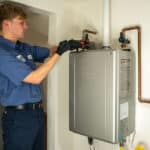
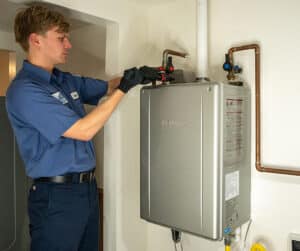
This is where hard water does the most measurable financial damage. Calcium scale settles at the bottom of a tank water heater and acts as an insulating layer between the burner and the water. Your heater has to work harder and longer to reach the set temperature, using more energy and putting more stress on the heating element or burner. Scale-coated tanks often make a rumbling or popping noise — that’s steam bubbles pushing through the sediment layer. An unserviced tank in Austin hard water conditions can fail years ahead of its expected lifespan. Visit our water heater services page to learn about annual maintenance flushes that clear out that sediment before it becomes a bigger problem.
Pipes
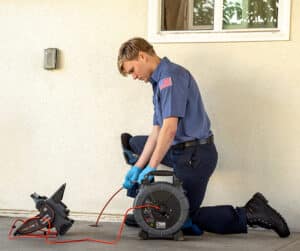
In older homes with copper or galvanized steel pipes, scale can gradually narrow the interior diameter of the pipe over years. This is a slow process, but it compounds with Austin’s other plumbing challenge: clay soil expansion and contraction that stresses pipes at joints. Our water line services team sees plenty of Austin homes where both factors are working together. If your water pressure has dropped noticeably over the past few years and there’s no obvious cause, a plumber can scope the lines and assess what’s happening inside.
Appliances
Dishwashers, washing machines, refrigerator ice makers, and coffee makers all take a hit from hard water. Scale coats heating elements, clogs spray arms, and reduces appliance efficiency. Manufacturers often cite hard water as a contributing factor in warranty claim rejections. The real cost is in appliances that die five years earlier than they should — and replacement costs that dwarf what a whole-home water treatment system would have cost.
Wizard Pro Tip: Drop a white vinegar tablet in your dishwasher’s rinse-aid compartment as a temporary fix for spotting — but it’s treating the symptom, not the source. If you’re fighting hard water buildup on multiple fronts (dishes, showerheads, laundry), that’s a signal that whole-home treatment will pay for itself faster than you’d expect.
Solutions: What Actually Works
There’s no shortage of water treatment options on the market — and the marketing can make it hard to sort the effective systems from the gimmicks. Here’s a straightforward breakdown:
Salt-Based Water Softeners
This is the gold standard for hard water treatment. A softener uses an ion exchange process to swap calcium and magnesium ions for sodium ions, effectively removing hardness from the water before it reaches your pipes and appliances. The result is noticeably softer water — better lather, no scale, longer appliance life. The trade-off is ongoing salt cost, a small amount of added sodium to the water (a consideration for some health conditions), and periodic regeneration cycles. For Austin homes with serious hard water, a quality softener is often the most cost-effective long-term investment.
Salt-Free Conditioners (Template Assisted Crystallization)
Salt-free systems don’t remove hardness minerals — they change the form of calcium carbonate so it doesn’t stick to surfaces as readily. They won’t give you the silky-water feel of a traditional softener, but they do meaningfully reduce scale buildup in pipes and appliances without adding sodium or requiring salt maintenance. These are a reasonable middle ground for homeowners who want scale protection without the upkeep of a softener.
Whole-Home Filtration
If your concern goes beyond hardness — taste, chlorine, sediment, or other water quality factors — a whole-home filtration system can address multiple issues at once. Many Austin homeowners pair a softener with a carbon filter for drinking-water quality throughout the house. Our water treatment products page covers the systems we install and service, and we can test your water and recommend the right combination for your specific situation.
Point-of-Use Filters
Under-sink or countertop filters address drinking and cooking water quality at a specific tap. They don’t protect your pipes or appliances, but they’re a cost-effective option if your primary concern is taste and drinking water quality rather than whole-home scale.
Maintenance Steps You Can Take Now
While you’re deciding on a treatment solution, a few habits will reduce hard water’s impact in the meantime:
- Soak showerheads in white vinegar monthly to dissolve scale buildup and restore flow.
- Run a water heater flush annually — or have a plumber do it — to clear sediment before it hardens into a permanent layer.
- Use a rinse-aid in your dishwasher and clean the spray arms periodically.
- Check and replace your water heater’s anode rod every 3–5 years — in hard water conditions, it depletes faster and is your heater’s main corrosion defense.
For plumbing repairs related to scale-related damage — corroded pipe sections, failed water heater elements, reduced flow lines — our team is available 7 days a week. Check our current specials for any active promotions on water treatment or plumbing service. And if you’re not sure what’s going on with your water or plumbing, a visit from one of our licensed plumbers (M-39879) is always a good starting point.
Tired of Fighting Austin Hard Water?
We can test your water, assess your plumbing, and recommend a treatment solution that fits your home and budget — with upfront pricing and no pressure. Call (512) 873-7333 or schedule online today.

 Your Privacy Choices